 Bin Master
Warm Textures: Blankets, Rugs & Pillows for a Cozy Small Bedroom
A small bedroom can have perfect furniture and still feel cold — the missing layer is usually texture. Soft, warm materials absorb sound, soften hard edges and make a tiny room feel like a nest instead of a box. These ideas add warmth with textiles only, so nothing needs renovating and everything can move with you.
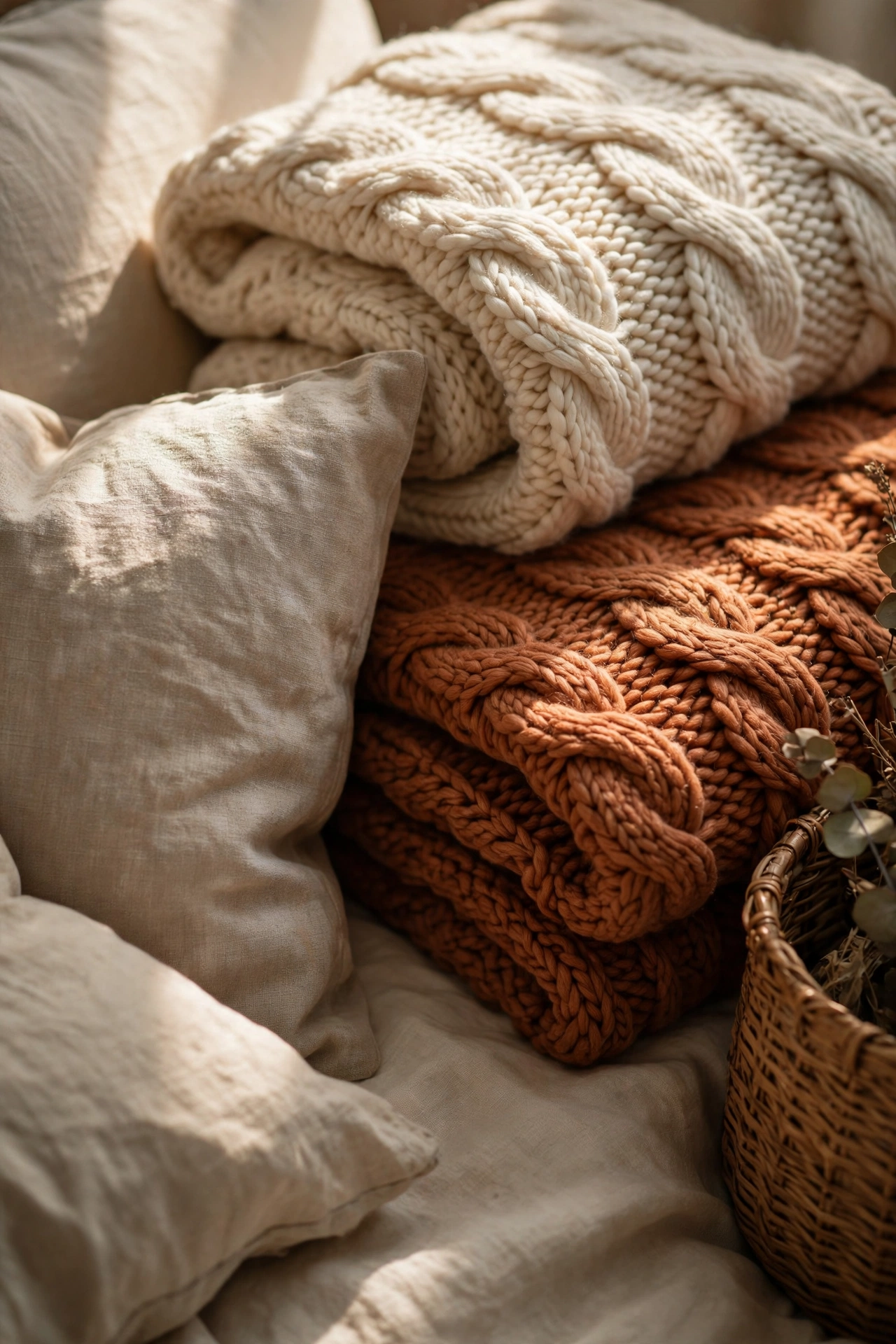
1. Start with one chunky knit throw
A thick knit blanket is the fastest texture upgrade there is — drape it across the foot of the bed and the whole room looks warmer. Choose a warm neutral like beige or oatmeal so it pairs with any bedding. It also earns its keep on cold nights as an extra layer.
2. Put a soft rug where your feet land
The first step out of bed sets the tone for the morning, so place a plush rug right beside the bed. A 4x6 size covers the landing zone of most small bedrooms without swallowing the floor. Washable rugs matter here — bedroom rugs collect dust faster than any other in the house.
3. Layer pillows in three sizes
Two sleeping pillows, two smaller cushions and one long lumbar pillow give a bed that layered, hotel-cozy look. Mix one smooth fabric with one textured fabric, like linen with knit, for depth. In a small room, keep the colors in one family so the layers read as calm, not cluttered.
4. Mix materials, not colors
Warmth comes from contrast in touch, not contrast in color: knit against cotton, woven seagrass against smooth wood, a nubby rug under a plain bed. A room in a single color family but five textures feels rich. A room in five colors but one texture feels flat and busy.
5. Add natural woven baskets
Seagrass and rattan bring an organic texture that plastic storage never will. Use lidded baskets for the loose things — chargers, books, spare blankets — so texture and tidiness arrive together. A set of nesting sizes lets you group them in one corner as a single calm cluster.
6. Choose bedding you can layer by season
A light cotton duvet plus a separate throw beats one heavy comforter: layers trap warmth in winter and peel back in summer. Textured bedding — a subtle waffle or washed linen look — adds softness without any extra objects in the room.
7. Soften one hard surface with fabric
Every small bedroom has one cold surface: a bare wall behind the bed, a plain wardrobe door, an empty window. A fabric wall hanging, upholstered headboard or full-length curtain warms it instantly. Fabric on walls also quiets echo, which makes small rooms feel calmer at night.
8. Hide storage inside soft furniture
A padded storage bench at the foot of the bed adds a soft, upholstered surface and swallows spare blankets inside. It is seating, texture and hidden storage in one footprint. Choose a fabric tone close to your rug so the pieces feel like a set.
9. Repeat each texture at least twice
One knit item looks like an accident; knit on the bed and knit on a cushion looks like a style. Repeat every material in two places — wood, weave, knit, cotton — and the room feels designed. This is the rule that ties a small room together without buying matching sets.
10. Keep one surface completely bare
Texture needs breathing room to be noticed. Leave the top of the dresser or one stretch of wall empty so the soft layers stand out. In the coziest small bedrooms, warmth comes from a few rich textures — not from covering everything.
Start small: add just the throw blanket and the bedside rug this week. Those two textures alone change how the room feels the moment you walk in.