 Bin Master
12 Small Bedroom Color Ideas That Open Up the Room
Color is the cheapest way to change how big a bedroom feels. The right shades push the walls back, bounce light around and calm the whole room down. Here are twelve color ideas that make a small bedroom feel open instead of boxed in.
1. Warm white on every wall
Pure white can feel cold, but a warm white with a hint of cream makes a small room glow. It reflects the most light of any color and works with every bedding color you own. Keep the ceiling the same shade so the corners disappear.
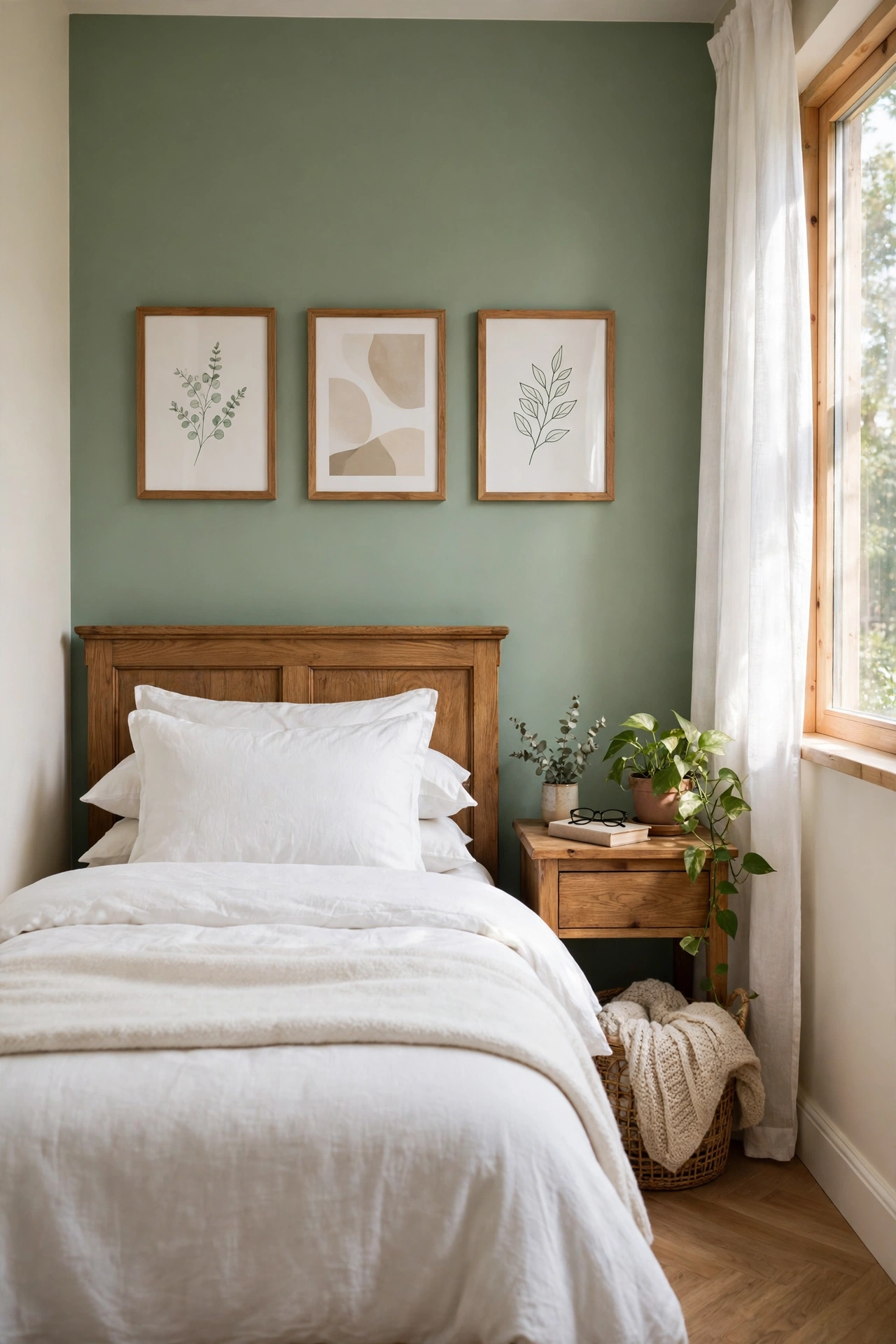
2. Soft sage green
Sage is the color of calm — green enough to feel fresh, grey enough to stay quiet. It pairs beautifully with white bedding and light wood. In a small room it reads like a breath of fresh air.
3. Pale blush pink
A dusty, barely-there pink warms up a small bedroom without darkening it. It flatters skin tones in mirror light and looks lovely with cream and brass accents. Keep it pale so the room stays bright.
4. Light greige — grey meets beige
Greige is the neutral that never fights with anything. It is warmer than grey, calmer than beige, and it hides the visual clutter of mixed furniture. A perfect base if your pieces do not match.
5. Paint the ceiling a touch lighter
A ceiling one or two shades lighter than the walls seems to float higher. It is a subtle trick, but in a low small room it makes a real difference. White with the faintest hint of the wall color works best.
6. One soft accent wall behind the bed
If all-white feels plain, paint only the wall behind the bed in a soft muted tone like clay, sage or dusty blue. The bed wall becomes the focus and the other three walls stay light and open. One wall is also a one-afternoon job.
7. Match curtains to the wall color
When curtains blend into the wall, the wall looks longer and the window looks bigger. Choose a fabric close to your wall shade and hang them high and wide. Light-filtering fabrics keep the room bright even when closed.
8. Keep bedding in one color family
A bed takes up most of a small room, so its colors set the tone for everything. Sheets, duvet and pillows in tones of one family — all whites and creams, or all soft blues — look calm and uncluttered. Add texture instead of extra colors.
9. A light rug to widen the floor
A pale rug makes the floor look like one wide, open surface instead of small patches between furniture. Choose a low-pile, washable one so it stays bright in a high-traffic small room. Leave a border of floor visible around it.
10. Warm light, not white light
Color is only half the story — light temperature changes how every shade looks. Warm bulbs make creams and wood tones feel cozy instead of grey. A dimmable bedside lamp lets you soften the whole room at night.
11. Natural wood as your accent color
When walls and bedding are light, warm wood becomes the accent all on its own. A wood headboard, frame or stool adds depth without adding a competing color. It keeps the palette simple: light, lighter, wood.
12. Dark color only below eye level
You do not have to ban dark shades — just keep them low. A deep-colored bed skirt, storage bench or rug anchors the room while the walls and ceiling stay light. The eye reads the bright upper half, so the room still feels tall.
Start small: try the warm white walls and bedding in one color family first. Those two changes cost the least and open up a small bedroom more than anything else on this list.