 Bin Master
Minimalist Small Bedroom Furniture Ideas: Less, But Better
Minimalist furniture is not about owning almost nothing — it is about owning fewer pieces that work harder. In a small bedroom, every item should be the right size, do more than one job, or disappear when you do not need it. These ideas help you choose pieces that keep the room open and calm.
1. Count your pieces before you buy
Most small bedrooms need only five pieces: a bed, a nightstand, a dresser or closet storage, a small desk or chair, and a lamp. If a sixth piece wants in, it has to replace one of the five. This simple count stops slow clutter before it starts.
2. Choose furniture with legs
Pieces raised on legs let you see the floor underneath, and visible floor is what makes a small room feel bigger. A bed frame, nightstand and dresser on slim legs look lighter than the same pieces sitting flat. It also makes cleaning underneath effortless.
3. Replace the nightstand with a floating shelf
A floating shelf holds a book, a phone and a glass of water — everything a nightstand does — with zero floor footprint. Mount it at mattress height beside the bed. Add one small lamp and the corner is complete.
4. Use one warm lamp instead of many light sources
A single bedside lamp with a warm, dimmable bulb covers reading and winding down. Fewer cords and fewer fixtures keep surfaces calm. Choose a compact lamp so it fits a shelf as easily as a nightstand.
5. Store soft things in matching cubes
Open shelves and closet gaps look tidy when everything loose lives in identical fabric cubes. The uniform boxes turn visual noise into one calm block of color. Label them on the inside edge so you can find things without showing the labels.
6. Pick a low bed frame
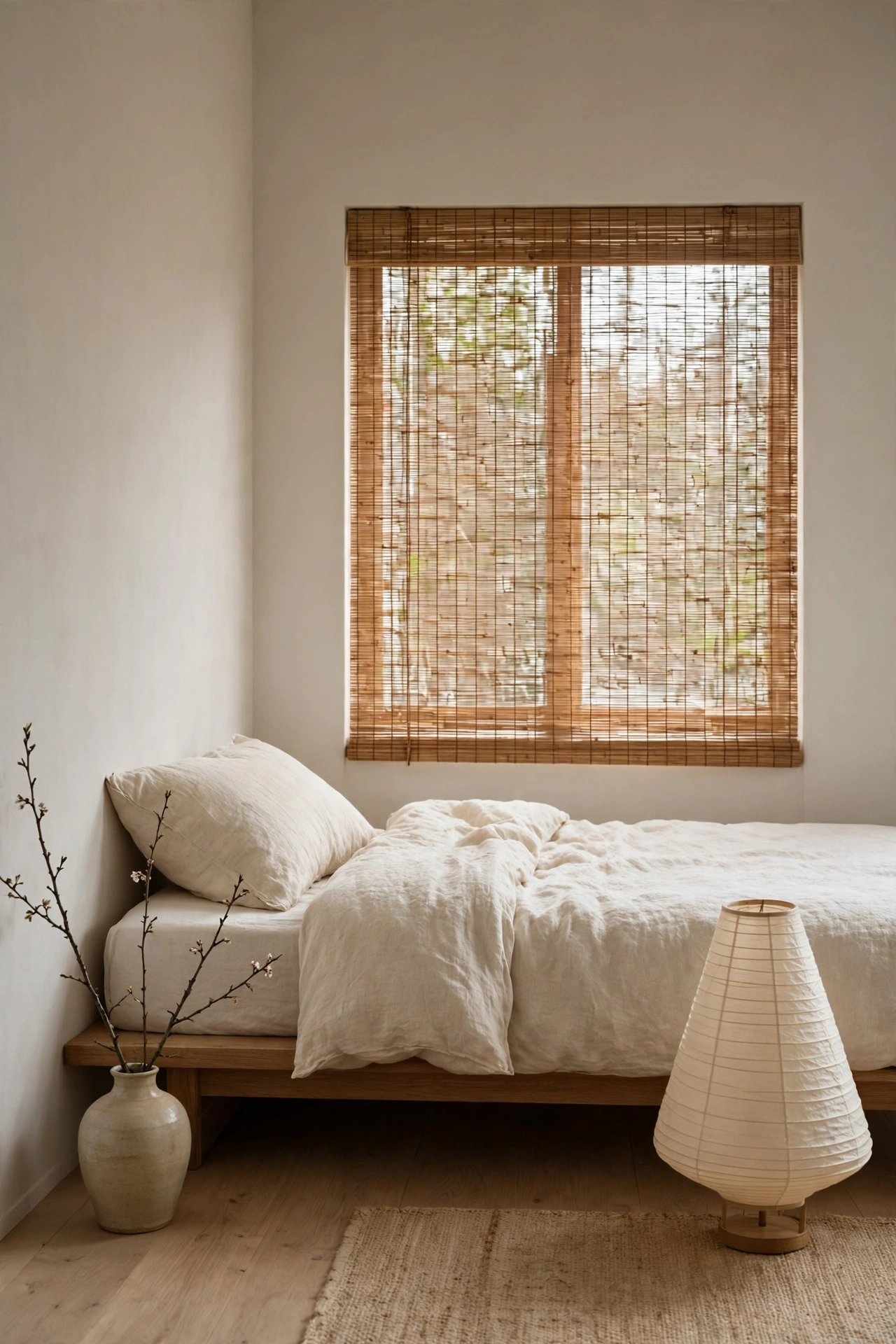
A low platform bed leaves more wall visible above it, which makes the ceiling feel higher. It also suits the calm, grounded look of minimalist and Japandi rooms. Skip the tall headboard — a simple cushion or wall panel does the same job with less bulk.
7. Let one dresser do all the clothing work
One tall, narrow dresser holds more than two wide, low ones and takes less wall. Drawers beat open rails for a calm look because everything disappears behind a flat front. If the closet covers clothes, skip the dresser entirely and enjoy the empty wall.
8. Keep a consistent material palette
Light wood, white and one soft textile color across all pieces makes five different items read as one set. Mixed finishes are what make a small room feel busy. When in doubt, match the new piece to the bed frame.
9. Choose foldable over fixed
A folding chair, a wall desk that closes, a stool that stacks — furniture you can put away is furniture that only exists when needed. This is the minimalist answer to a work corner in a tiny bedroom. The room gets its floor back every evening.
10. Leave one surface completely empty
An empty dresser top or a bare stretch of wall is not wasted space; it is what makes the rest of the room feel restful. Protect at least one empty surface from becoming a landing strip. Your eyes need somewhere to rest.
Start small: swap the bulky nightstand for a floating shelf and put loose items into matching cubes. Two changes, and the room already feels half as crowded.